
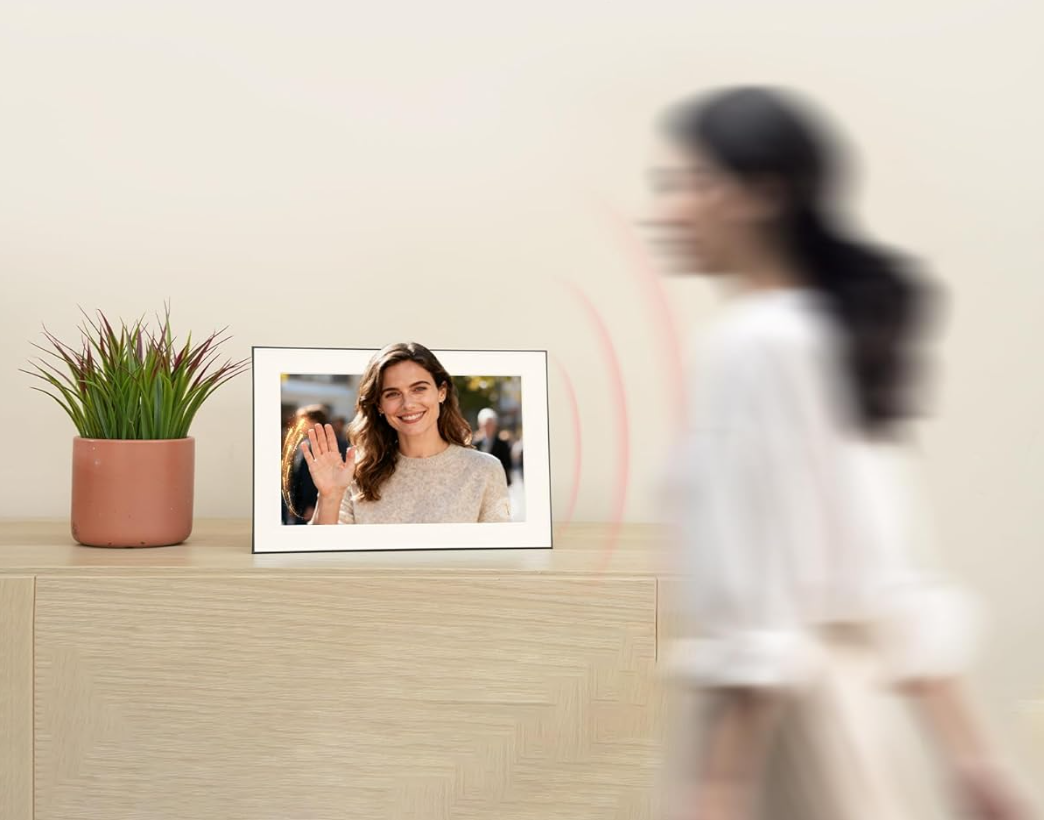
A Living Memorial vs. a Static One
When someone we love passes away, we want to keep their memory present—not locked away in a box or buried in a phone's camera roll. A printed photo on a shelf is meaningful, but it's static. It shows one moment, one expression, one day.
A digital photo frame creates something different: a living memorial. It cycles through dozens or hundreds of photos, showing the full breadth of a person's life—their youth, their milestones, their relationships, their everyday moments. It keeps them present in a way that a single framed print cannot.
For families who have lost a parent, grandparent, spouse, sibling, or close friend, a thoughtfully curated digital memorial frame can be a source of comfort and connection every day.
What Matters Most for Memorial Displays
A memorial frame has different requirements than a frame used for everyday family photos. Here's what to prioritize:
- Display quality: Memorial photos often include older, lower-quality images. A good display should handle these gracefully without making imperfections more visible.
- AI restoration tools: The ability to colorize, repair, and animate old photos is uniquely valuable for memorial use.
- Multi-family sharing: Grief is shared. Multiple family members should be able to contribute photos from their own collections.
- Reliability: A memorial frame should work consistently without requiring technical maintenance from grieving family members.
- No ongoing fees: A memorial frame may run for years or decades. Subscription fees add up and create the risk of the service being discontinued.
Homture Features for Memorial Use
Old Photo Alive — Animation Feature
Homture's "Old Photo Alive" feature adds subtle, gentle motion to still photographs. A portrait of a grandmother from decades ago can appear to breathe, to shift slightly, to feel present rather than frozen in time. This is one of the most emotionally resonant features available in any digital frame, and it's particularly meaningful for memorial displays.
The animation is subtle—not cartoonish or unsettling. It creates the impression of life without distorting the original photo. For many families, seeing a loved one's portrait appear to move is a deeply moving experience.
AI Colorization for Black-and-White Photos
Many memorial photo collections include black-and-white photos from earlier decades—parents' wedding photos, grandparents' portraits, childhood images from the mid-20th century. Homture's AI colorization can transform these into full-color images, making them feel more immediate and alive.
Colorization doesn't replace the original—it creates a new version that can be displayed alongside the original. Seeing a grandparent's black-and-white portrait transformed into a color image can be a powerful emotional experience for family members who never knew them in color.
AI Photo Repair
Old photos often suffer from physical damage—scratches, tears, fading, water damage. Homture's AI repair feature can restore these damaged images, making them suitable for display. This is particularly valuable for memorial collections where some of the most meaningful photos may be the oldest and most damaged.
Photo-to-Video Tribute
Homture's AI can create a video presentation from a collection of still photos. For memorial use, this means you can create a tribute video—a flowing visual biography of a loved one's life—without any video editing skills. This can be especially meaningful for anniversaries, birthdays, or family gatherings where you want to honor someone's memory collectively.
Multi-User Sharing
Grief and memory are communal. Homture's multi-user sharing allows multiple family members to contribute photos from their own collections. A sibling might have photos from childhood that parents don't have. Children might have photos from the last years of a parent's life. Cousins might have photos from family reunions. Together, these contributions create a more complete portrait of a life.
No Subscription Fees
A memorial frame may run for many years—potentially decades. Subscription-based services create ongoing costs and the risk that the service will be discontinued, taking the memorial with it. Homture's no-subscription model means the frame continues to work as long as the hardware functions, with no recurring fees.
Restoring and Honoring Historical Photos
One of the most meaningful aspects of creating a memorial display is the process of gathering and restoring old photos. This often involves scanning physical prints, reaching out to family members for their collections, and using AI tools to restore damaged images.
Scanning Physical Photos
Many memorial photo collections include physical prints that need to be digitized. A flatbed scanner produces the best results for old photos. Smartphone scanning apps (like Google PhotoScan) can work for casual use, but a dedicated scanner preserves more detail from damaged or faded prints.
Using AI Restoration
Once digitized, Homture's AI repair and colorization tools can significantly improve the quality of old photos. The process is straightforward: upload the photo through the app, apply the desired enhancement, and the improved version is ready for display.
Creating a Family Tribute Together
The process of creating a memorial frame can itself be a meaningful act of collective remembrance. Gathering photos, sharing memories, and deciding together which moments to include brings family members together around a shared purpose.
Inviting Contributors
Reach out to family members and ask them to share their favorite photos of the person being honored. You'll often discover photos you've never seen—moments from before you were born, relationships you didn't know about, expressions and settings that reveal new dimensions of someone you thought you knew completely.
Organizing the Collection
Consider organizing the memorial slideshow chronologically, or by theme: childhood, relationships, achievements, everyday moments, family gatherings. A thoughtful organization makes the slideshow feel like a biography rather than a random collection of images.
Setting Up a Memorial Frame
Choosing a Location
Place the memorial frame where the person being honored would have been present—a living room, a family dining area, or a space where family gathers. The frame should be visible and accessible, not tucked away.
Initial Photo Curation
Start with 30–50 carefully selected photos that represent the full arc of the person's life. You can always add more over time. Quality and variety matter more than quantity—a well-curated selection of meaningful photos creates a more moving tribute than hundreds of similar images.
Ongoing Updates
A memorial frame doesn't have to be static. You can add new photos as you discover them, update the collection on significant dates, or add photos of family milestones that the person would have celebrated—new grandchildren, graduations, weddings.
Conclusion
A digital photo frame used as a memorial display is one of the most meaningful applications of this technology. It transforms a collection of photos into a living tribute—a daily presence that keeps a loved one's memory active and visible.
Homture's combination of AI restoration tools (colorization, repair, animation), multi-user family sharing, photo-to-video tribute creation, and no subscription fees makes it particularly well-suited for memorial use. The Old Photo Alive feature, in particular, offers something genuinely unique: the ability to make a still portrait feel present and alive.
For families navigating loss, a thoughtfully created memorial frame can be a source of comfort, connection, and ongoing remembrance—a way of keeping someone present in the daily life of the people who loved them.